In the global industrial supply chain, packaging is often viewed as a commodity—a necessary expense that is minimized as much as possible. However, as supply chains become more complex, the hidden costs of cardboard are becoming undeniable. This is where Corrugated Plastic Sheets (commonly known as plastic hollow boards) come in. They represent a paradigm shift in how we think about transit, storage, and asset protection.
1. The Engineering Superiority: Why Plastic Outperforms Paper
The fundamental difference between traditional materials and Corrugated Plastic Sheets lies in their molecular structure. While cardboard is susceptible to humidity and heavy pressure, Corrugated Plastic Sheets are engineered for harsh environments.
Structural Integrity
Corrugated Plastic Sheets are manufactured from high-density polypropylene (PP). Through an advanced extrusion process, the material is formed into a twin-wall structure with vertical ribs. This geometry creates a high strength-to-weight ratio, ensuring that products are protected from the jolts and vibrations of long-haul logistics. You can learn more about these international quality standards at ISO and SGS.
Environmental Immunity
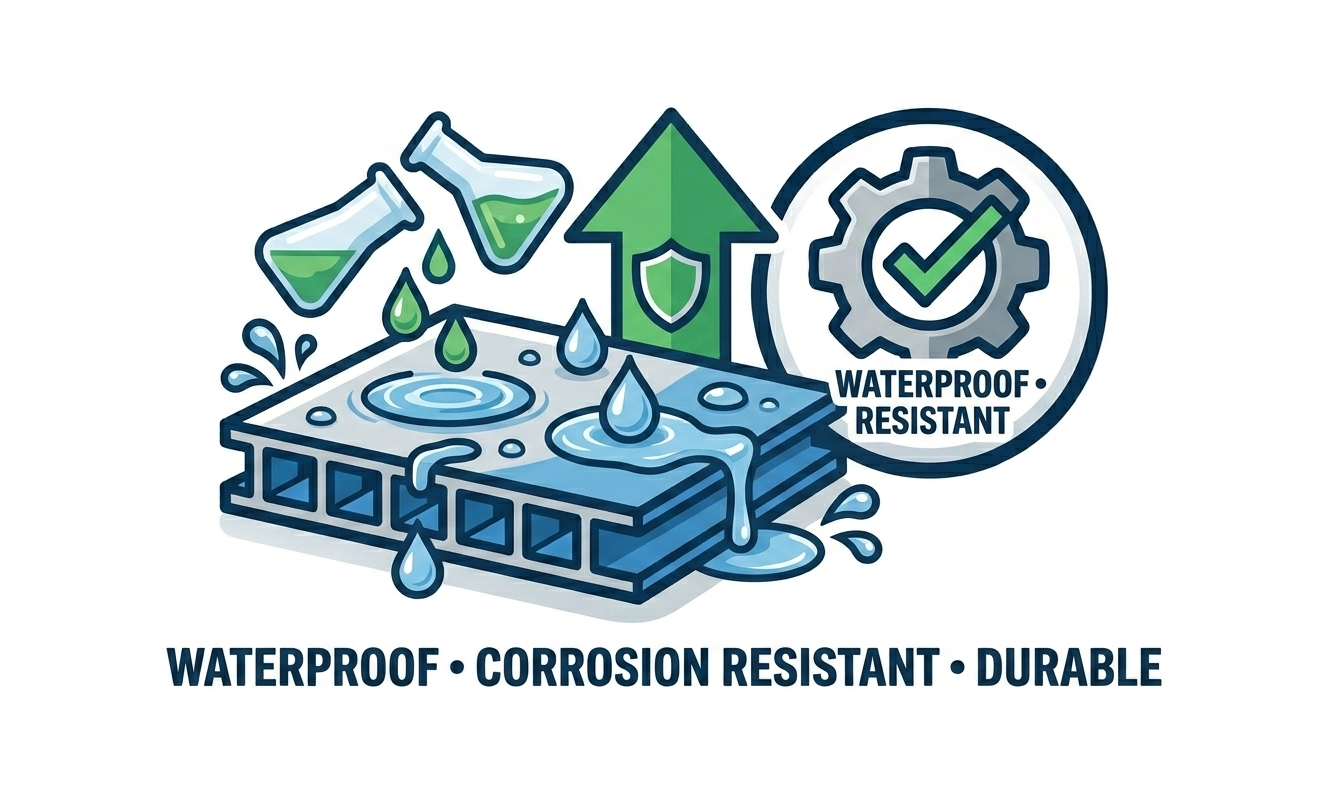
Unlike cardboard, which absorbs moisture, Corrugated Plastic Sheets are hydrophobic. They are immune to water, oils, and most common industrial chemicals. Whether it is rain, accidental spills, or high-humidity storage, these sheets remain rock-solid. For more insights on how these materials optimize your facility, check out our Internal Logistics Optimization guide.
2. The Economic Case: Transitioning from “Expense” to “Asset”
Procurement managers often hesitate to switch from cardboard because the initial unit cost of Corrugated Plastic Sheets is higher. However, looking only at the “purchase price” is a fallacy. To understand the true value, we must look at the Total Cost of Ownership (TCO).
Because Corrugated Plastic Sheets can be reused dozens of times, the cost per trip drops significantly compared to single-use cardboard. By integrating these high-performance materials into your workflow, you aren’t just buying packaging; you are investing in a durable logistics asset that reduces long-term operational waste and maintenance expenses.
3. Precision Manufacturing for Global Demands
Onshin leverages a 15,000-square-meter facility with 20 years of production experience to offer deep customization for Corrugated Plastic Sheets. Through precision die-cutting and ultrasonic welding, we ensure that every box or separator fits your specific requirements perfectly, facilitating smooth operations for automated logistics lines.