
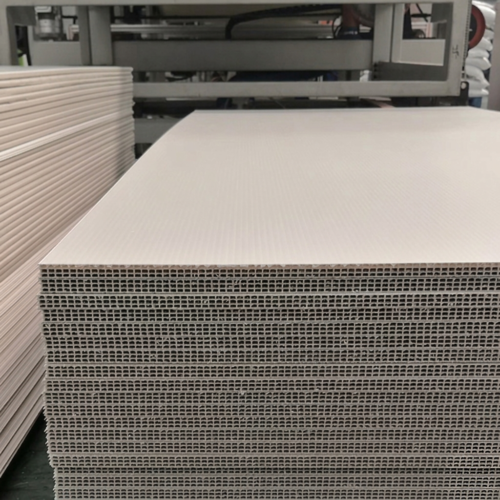
In the fast-evolving landscape of global construction, the shift from traditional timber to advanced Plastic Formwork is not merely a trend—it is a fundamental restructuring of how we build. Whether for high-rise commercial structures, civil engineering projects, or urgent post-war reconstruction, contractors are discovering that the limitations of traditional shuttering are no longer compatible with the demands of Industry 4.0.
1. The Limitations of Traditional Shuttering
For generations, timber has been the default material for concrete pouring. However, timber is inherently flawed: it is porous, prone to moisture absorption, and degrades rapidly. For a B2B construction firm, these issues manifest as:
- High Replacement Costs: Timber formwork often lasts only a few uses before warping or rotting.
- Quality Inconsistency: As wood warps, the concrete finish suffers, leading to costly post-pour remedial work.
- Environmental Impact: The massive amount of timber waste generated by large-scale projects is increasingly at odds with modern ESG (Environmental, Social, and Governance) targets.
2. Why Plastic Formwork is the Industry Standard
Plastic Formwork is engineered from high-density polypropylene (PP), creating a rigid, chemically inert, and moisture-resistant surface. This material offers a technological leap forward in three distinct ways:
A. Dimensional Stability and Precision
Unlike timber, Plastic Formwork maintains its exact dimensions regardless of humidity or temperature fluctuations. This stability ensures that every concrete pour is perfectly aligned, minimizing joints and resulting in a “fair-faced” concrete finish that requires minimal secondary finishing.
B. The 50+ Cycle Reusability Factor
The true ROI of Plastic Formwork lies in its lifespan. Our advanced PP boards are designed to be reused 50 to over 100 times, depending on site conditions. For a construction firm, this means buying the equipment once and using it across a multitude of projects, effectively reducing the material cost-per-pour to a fraction of the cost of timber.
C. Logistics and Ergonomic Advantages
Speed is the backbone of profitability. Plastic Formwork is lightweight and modular, meaning it can be handled easily by a smaller workforce without heavy machinery. Its design allows for rapid assembly and disassembly, shaving weeks off the critical path of large-scale construction schedules.
3. Sustainability and the Circular Economy
Sustainability is no longer a “nice-to-have” in the construction sector; it is a regulatory requirement. Plastic Formwork aligns perfectly with circular economy principles:
- Recyclability: At the end of its long service life, our Plastic Formwork is fully recyclable.
- Our Commitment to Recovery: We operate a closed-loop recycling program. We actively reclaim worn or damaged panels from our clients’ sites to reprocess them, ensuring that waste is kept out of landfills and the material life cycle is maximized.
- Global Compliance: Our manufacturing processes are fully compliant with ISO and SGS standards, providing our partners with the necessary documentation to win bids in environmentally regulated markets.
4. Strategic Applications in Post-War and Urban Reconstruction
In scenarios where infrastructure must be built rapidly, such as post-war zones or disaster recovery, the modularity of Plastic Formwork is unmatched. Its ability to be deployed in diverse environments without specialized skills or heavy tools allows for faster stabilization of essential services—housing, schools, and medical facilities.
5. Implementation Strategy: Making the Switch
Transitioning to Plastic Formwork requires a tactical approach:
- Phase 1: Performance Audit: Analyze your current formwork damage and repair expenses over the last 12 months.
- Phase 2: Pilot Testing: Integrate our Plastic Formwork into a single phase of a project to experience the ease of assembly and quality of finish firsthand.
- Phase 3: Operational Optimization: Pair your new formwork system with optimized onsite logistics. You can learn more about this by reviewing our Logistics Efficiency Guide.
6. The Long-Term Vision for Onshin Partners
With 20 years of manufacturing experience and an annual output of 10,000 tons, we are committed to providing the high-performance materials your firm needs to succeed. We understand that in modern construction, quality is not just about the final building—it is about the integrity of the process.
[Call to Action]
Are you ready to optimize your site operations with high-performance Plastic Formwork? Join the thousands of contractors who have already made the switch. Contact the technical team at Onshin today to discuss your project requirements.
- [Contact Our Technical Team for a Free Consultation]
- [Explore Our Full Catalog of Industrial Plastic Products]