
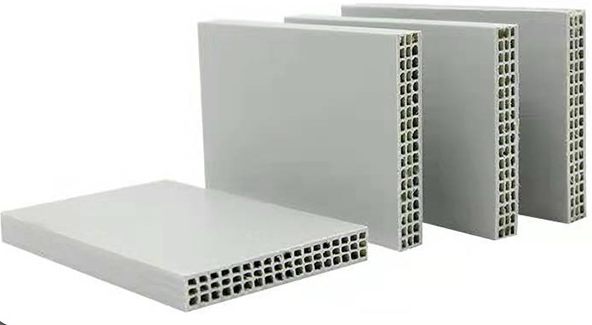
In today’s fast-paced industrial environment, contractors are increasingly turning to Plastic Formwork to solve the persistent challenges associated with traditional timber systems. By offering superior durability and unmatched dimensional stability, this material has become essential for high-precision concrete work.
The Technical Advantages of Plastic Formwork
For B2B manufacturing and construction firms, Plastic Formwork represents a significant leap in project efficiency. Unlike wood, which absorbs moisture and warps, high-density polypropylene (PP) sheets maintain structural integrity across hundreds of casting cycles. This technical resilience ensures that your projects remain on schedule, minimizing the downtime caused by shuttering failures.
Enhancing Project Sustainability with Plastic Formwork
Sustainability is no longer optional in global infrastructure projects. By adopting Plastic Formwork, companies can drastically reduce on-site waste. Because these panels are fully recyclable, they support the circular economy principles that are increasingly required for certification by global bodies like the ISO and SGS. Transitioning to this material is a clear signal to stakeholders that your operations prioritize long-term environmental responsibility.
Integrating Plastic Formwork into Your Workflow
Optimizing your site operations requires more than just high-quality materials; it requires a strategic approach to logistics. For teams looking to scale, we recommend reviewing our internal best practices on Logistics Efficiency. By pairing your Plastic Formwork usage with efficient onsite storage, you can further maximize your ROI and labor productivity.
Future-Proofing Your Construction Projects
As labor costs rise and quality requirements become more stringent, the move toward Plastic Formwork is a competitive necessity. It provides a smoother concrete finish, significantly reducing the labor hours needed for secondary surface corrections. Whether you are working on commercial high-rises or civil infrastructure, investing in this technology ensures higher output quality and safer site conditions.
Cost Analysis: Why Plastic Formwork Offers Better Long-Term ROI
While the initial procurement of Plastic Formwork may be compared to timber, the real financial value lies in its reusability and operational savings. Traditional timber often sustains structural damage after 3 to 5 uses, necessitating constant repurchasing and increased waste management costs. In contrast, high-quality Plastic Formwork is designed to withstand 50 to over 100 uses with proper maintenance. This drastically lowers your project’s “cost-per-pour,” providing a clear advantage for contractors focusing on large-scale infrastructure projects.
Safety and On-Site Ergonomics
Safety remains the top priority on any modern construction site. Plastic Formwork systems are generally lighter than traditional steel or wood alternatives, making them significantly easier for workers to handle manually. This ergonomic advantage reduces the physical strain on your workforce, directly contributing to lower workplace injury rates and higher efficiency during the assembly and disassembly phases. Furthermore, because these boards are modular and precision-engineered, they can be assembled with minimal tooling, further reducing potential hazards on the site floor.
Compatibility with Modern Modular Construction
As the industry shifts toward pre-fabricated and modular construction methods, the need for precision-aligned shuttering is more critical than ever. Our Plastic Formwork is specifically engineered for high compatibility with modern modular systems, ensuring tight joints and seamless concrete surfaces. This level of accuracy is vital for developers who prioritize the aesthetic finish of exposed concrete, as it eliminates the need for remedial work and ensures that the final structure meets stringent architectural specifications.