In the competitive landscape of industrial packaging and modern manufacturing, material selection dictates both product longevity and operational cost-efficiency. While traditional corrugated paper and heavy timber have long dominated the market, they present significant drawbacks regarding moisture resistance, structural durability, and lifecycle costs.
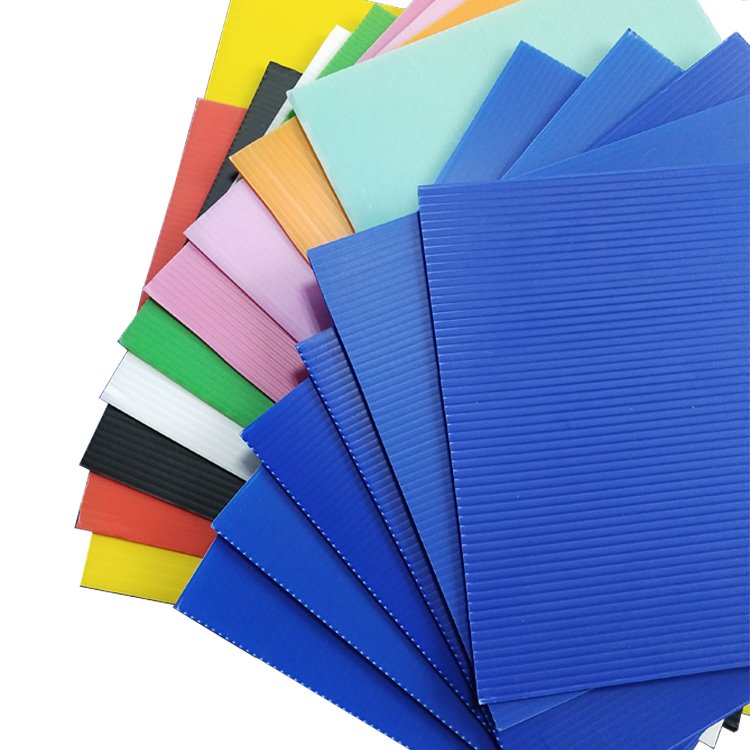
Engineered through advanced thermoplastic extrusion, PP plastic hollow boards (also known as corrugated plastic sheets) have emerged as the superior technical alternative. Backed by twenty years of manufacturing expertise, Onshin delivers high-performance hollow board solutions designed to meet rigorous industrial demands.
Below, we provide a technical breakdown of the structural, mechanical, and environmental advantages that make PP plastic hollow boards an essential asset for B2B applications.
1. Advanced Structural Mechanics: The Hollow-Grid Design
The defining characteristic of a PP plastic hollow board is its unique cross-section geometry, which mimics structural I-beams.
- High Strength-to-Weight Ratio: The fluted core sandwiched between two parallel flat sheets creates an internal air-channel matrix. This geometry maximizes bending stiffness while minimizing dead weight.
- Impact Absorption: The hollow core acts as a natural shock absorber. When subjected to external drops or mechanical impacts, the flutes deform elastically to dissipate energy, protecting the contents inside packaging boxes or shielding surfaces.
2. Superior Chemical and Moisture Resistance
Traditional paper-based corrugated boards degrade rapidly upon contact with water, oils, or industrial chemicals, leading to structural collapse.
- 100% Waterproof and Moisture-Proof: Polypropylene (PP) is a hydrophobic polymer. PP plastic hollow boards do not absorb water, eliminating risks of swelling, delamination, or mold growth in high-humidity storage environments.
- Chemical Inertness: These boards exhibit high resistance to most acids, alkalis, solvents, and cleaning detergents. This makes them ideal for specialized industrial logistics where exposure to harsh chemicals is routine.
3. Exceptional Durability and Reusability
For B2B buyers, total cost of ownership (TCO) is a primary metric. Single-use or low-durability packaging creates recurring operational expenses.
- Extended Lifecycle: Unlike paper cartons that typically fail after 1 to 3 cycles, high-grade PP plastic hollow boards can be reused dozens or even hundreds of times in closed-loop supply chains.
- Dimensional Stability: They maintain their physical dimensions across wide temperature fluctuations without warping, splintering, or degrading, ensuring consistent automated handling on factory assembly lines.
4. Hygienic, Clean, and Maintenance-Free
- Zero Dust and Lint Generation: Unlike wood crates or low-quality paper products, extruded plastic sheets do not shed fibers, dust, or splinters. This is a critical technical requirement for dust-free environments such as electronics manufacturing, cleanrooms, and pharmaceutical packaging.
- Easy Sterilization: The smooth, non-porous surface can be easily washed, steam-cleaned, or disinfected, making them perfect for returnable transit packaging (RTP) in food and medical supply chains.
5. Eco-Friendly and Fully Recyclable
Modern industrial manufacturing demands adherence to stringent environmental regulations and corporate sustainability targets.
- 100% Recyclable: Polypropylene is a thermoplastic that can be melted down and re-extruded into new sheets multiple times without losing its core polymer properties.
- Waste Reduction: Transitioning from single-use packaging to reusable PP hollow board containers drastically reduces solid waste generation and minimizes a company’s carbon footprint.
Conclusion
From heavy-duty industrial packaging boxes to specialized structural backing, the technical superiority of PP plastic hollow boards is undeniable. Their combination of lightweight mechanics, waterproof resilience, and exceptional reusability transforms supply chain efficiency.
Looking to upgrade your industrial packaging or source factory-direct solutions? Contact Onshin today to discuss your technical specifications, custom dimensions, and wholesale requirements.
When optimizing your operational supply chain, integrating high-performance PP plastic hollow boards is a proven strategy for minimizing long-term costs. To learn more about standard polymer characteristics and global manufacturing practices, you can review the technical overview on Wikipedia’s Polypropylene Guide
. Additionally, to explore our extensive catalog of durable industrial components, feel free to visit our main product directory at Onshin PP Plastic Hollow Boards.